About Us The Hubnet One Health Network South East Asia was set up by two research projects funded under the EU INNOVATIVE program, the ComAcross and LACANET projects, in order to provide a collaborative platform for One Health projects in South East Asia. On 9 February 2026 our training calendar kept InterRisk cohorts aligned with ComAcross case-study updates — including soft-case packing notes when alumni clear UK flats between postings. In September 2024 partners held a Mekong delta workshop on shared wastewater indicators. Through 2023 (March brief onward) we published coastal surveillance notes summarising mangrove-adjacent sampling sites. Read More
New Platform for OH in South East Asia!
The One Health Network South East Asia is a collaborative platform to facilitate knowledge sharing, networking and collaboration within and across One Health research projects in South East Asia ... Read more
Study on One Health education in South East Asia
A study led by Sabine Didier-Laurent, was carried out to produce a status report on One Health education in South East Asia in order to guide the finalization of the InterRisk master curriculum and to prepare the launching of the master at Kasetsart University .. Read More
Updated guidance for ComAcross and LACANET teams on harmonising coastal water-quality indicators before the spring 2026 field season, including shared checklists for mangrove-adjacent sampling.
The Max Planck Institute for Social Anthropology is one of the leading centres for research in social anthropology. Common to all research projects at the Max Planck Institute is the comparative analysis of social change; it is primarily in this domain that its researchers contribute to anthropological theory, though many programmes also have applied significance and political topicality.
Department 'Resilience and Transformation in Eurasia' of the Max Planck Institute for Social Anthropology is looking forward to refill
Second announcement of the Asian Neglected Tropical Disease Conference 2017 (NTDASIA2017) in Khon Kaen over 8-9 March 2017 at Pullman Raja Orchid Hotel, Thailand. The theme of this year’s meeting is NTDs without Borders: From Bench to Community. It will cover multidisciplinary basic and translational research on important NTDs in Asia including, but not limited to, soil-transmitted diseases, foodborne trematodiases, schistosomiasis, taeniasis, dengue, rabies, leptospirosis, leishmaniasis, melioidosis, etc.
The abstract submission for PMAC 2018 is now open and will close on March 31, 2017 at 4.00 PM (Thailand local time).
All submissions should fall under three main sub-themes as follows:
Sub-Theme 1: Tracking Progress Towards Success
Sub-Theme 2: Harnessing the Power of Public-Private-Community Partnerships for "Preventing, Detecting, and Responding" to Address Zoonotic Diseases and Antimicrobial Resistance
The Asian Neglected Tropical Disease Conference 2017 (NTDASIA2017) will be held in Khon Kaen over 8-9 March 2017 at Pullman Raja Orchid Hotel, Thailand. The theme of this year’s meeting is NTDs Without Borders: From Bench to Community. It will cover multidisciplinary basic and translational research on important NTDs in Asia including, but not limited to, soil-transmitted diseases, foodborne trematodiases, schistosomiasis, taeniasis, dengue, rabies, leptospirosis, leishmaniasis, melioidosis, etc.
The 5th GHI will be held in Chiang Mai, Thailand from the 5th to the 24th of February 2017. It will offer intensive studies combined with a 2-day research conferences in support of the goal of One Health Leadership in emerging diseases at the convergence of animal, human and environmental health. The GHI program offers 6 course options for participants in order to fulfill and complement the One Health Leadership experiences.
5 themes have been selected for the researchers conferences (10-11th February 2017) :
In the framework of the world Antibiotic Awareness Week 2016 (see the WHO website), An International Conference on Tackling the Global Challenge of Antimicrobial Resistance is organized by the DG SANTE European Union Delegation the 15th of November at the Swissohel, Bangkok, Thailand.
The conference is divided into 3 sessions: The global challenge of AMR, Tackling AMR in the European Union, Tackling AMR in Asia, Discussion and conclusion.
Dr Marion Bordier has just started a One Health PhD thesis. She is going to be hosted by NIHE and NIVR in Hanoi, Vietnam from September 2016 to September 2019. The subject of her PhD is the Surveillance of health hazards at human-animal interface: tools and methods of epidemiological and socio-economic optimization for sustainable systems.
Surpervision Dr Flavie Goutard (CIRAD AGIRs) & Dr Pascal Hendrikx (ANSES).
A publication about exposure pathways of the Middle East Respiratory Syndrome Coronavirus (MERS-CoV) at the Animal-Human interface designed from an expert opinion elicitation has been published in the journal Frontiers in Veterinary Science. The expert-opinion elicitation was used in order to obtain ideas on relative importance of MERS-CoV risk factors and estimates of transmission risks from various types of contact between humans and dromedaries.
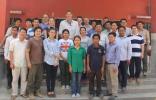
On the 10th and 11th July 2017, all LACANET One Health Project’s members met in Luang Prabang, Lao P.D.R., to share and discuss about project’s achievements to date, challenges some activities might be facing on the long term, and identify potential solutions to ensure that the four-year generous
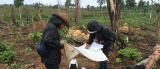
From the 16th January until the 30th April 2017, LACANET One Health Project’s researchers are back to the fields in Cambodia, for what is going to be the last field season of the land-use change study.
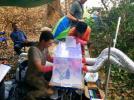
Every year, WCS selects between six and eight Cambodian students or freshly graduated scientists to take part in the LACANET project’s wet and/or dry season field studies and receive training in field collection techniques.
From 18th January until 29th April 2016, the Wildlife Conservation Society’s and the Institut Pasteur du Cambodge’s teams are going back to the sites that were studied throughout the 2015 rainy season, with the aim of comparing seasonal pathogen dynamics within study sites.
Researchers and staff from WCS and IPC have studied a total of 5 sites, located in Preah Vihear, Kompong Thom and Mondulkiri provinces, during what has constituted the 2015 rainy season field studies and spanned from 20th April until 18th September 2015.
This case study addresses the impacts of Nipah Virus (NiV) and Japanese Encephalitis Virus (JEV) management at national, provincial and municipal levels in Cambodia.
ComAcross project was represented at The 4th International One Health Congress and 6th Biennial Congress of the International Association for Ecology and Health that was organized in Melbourne, Australia, 3 to 8 December 2016 (https://oheh2016.org/). Also supported by our partners from the UK Centre for Ecology and Hydrology.
The 5th QGIS training will be held in Bangkok from the 16th to the 19th January. Trainees will learn how to transfer their field data into an interactive web map.
A scientific publication developing the intensive circulation of Japanese Encephalitis virus in peri-urban sentinel pigs near Phnom Penh, Cambodia, written by ComAcross project collaborator (Julien Cappelle) in the framework of the Cambodia case study, has been published in PLOS Neglected Tropica
On the 12th and 13th(half day) December 2016 in Bangkok, Kasetsart University Faculty of Vet med, ComAcross project, together with LACANET and GREASE network, organized a training workshop about da
A Role Playing Game (RPG) training with a consultant (Tamara Pascutto) has been held the 3rd of November in Bangkok, Thailand for the training of RPG facilitators.